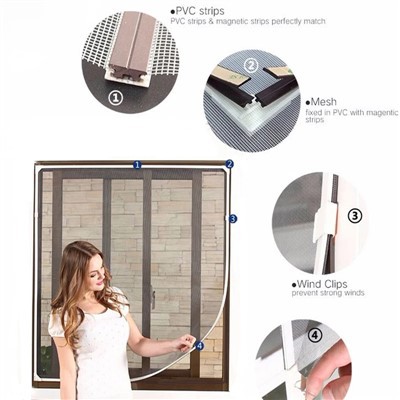
As a supplier of magnetic bug screens, one question that frequently arises from our customers is whether cold temperatures can affect the performance of these screens. In this blog post, I'll delve into the science behind magnetic bug screens and how cold weather might impact them.
Understanding Magnetic Bug Screens
Magnetic bug screens are a popular choice for homes and businesses alike. They are designed to keep insects out while allowing fresh air to circulate. The screens are typically made of a fine mesh material that is attached to a frame with magnets. When the door or window is opened, the magnets separate, and when it closes, the magnets re - attach, creating a seal that keeps bugs from entering.
There are different types of magnetic bug screens available on our website. For example, the Magnetic Fly Screen Door is ideal for doors, allowing easy entry and exit while keeping flies and other insects at bay. The Magnetic Mesh Screen Door offers a similar function but may have a different mesh design or magnetic strength. And the Magnetic Insect Screen Window is specifically tailored for windows, providing protection against insects while maintaining the view.
The Science of Magnets in Cold Conditions
To understand how cold affects magnetic bug screens, we first need to understand how magnets work. Magnets have a property called magnetization, which is the alignment of magnetic domains within the material. At normal temperatures, these domains are relatively stable, and the magnet can hold its magnetic force.
However, when exposed to cold temperatures, the behavior of magnets can change. In general, most magnets become stronger in colder temperatures. This is because the cold reduces the thermal energy of the magnetic domains, making them more likely to stay aligned. For a magnetic bug screen, this could mean that the magnets holding the screen together become stronger in cold weather, potentially creating a better seal.
Impact on the Mesh Material
While the magnets may benefit from cold temperatures, the mesh material of the bug screen could be affected in different ways. Most magnetic bug screens are made from synthetic materials such as polyester or nylon. These materials are known for their durability, but they are still subject to environmental factors.
In cold weather, synthetic materials can become more brittle. The cold causes the molecules in the material to slow down and become less flexible. This can make the mesh more prone to cracking or tearing, especially if it is subjected to stress. For example, if someone accidentally catches the screen on a sharp object or slams the door too hard, the brittle mesh may be more likely to break.
Installation and Cold Weather
Another aspect to consider is the installation of magnetic bug screens in cold weather. If a screen is installed during extremely cold conditions, the process can be more challenging. The cold - brittle mesh may be more difficult to handle, and the magnets may require more force to attach due to their increased strength.
Moreover, if the temperature drops significantly after installation, any small gaps or imperfections in the installation may become more apparent. The expansion and contraction of the frame and the mesh due to temperature changes can cause the screen to loosen or misalign, potentially reducing its effectiveness in keeping insects out.


Real - World Performance
In real - world scenarios, the impact of cold on magnetic bug screens can vary depending on the severity of the cold and the quality of the screen. In mild cold conditions, say temperatures above freezing, the changes in magnet strength and mesh flexibility are usually minimal. The screen should continue to function as normal, providing reliable protection against insects.
However, in severe cold, such as below - freezing temperatures, the risks of mesh damage and installation issues increase. It's important for customers to be aware of these potential problems and take appropriate precautions. For example, they can check the condition of the screen regularly during cold spells, and avoid putting unnecessary stress on the mesh.
Mitigating the Effects of Cold
As a supplier, we recommend several steps to mitigate the effects of cold on magnetic bug screens. First, when installing the screen, it's best to choose a relatively mild day. This will make the installation process easier and reduce the risk of damage to the mesh.
Second, customers can consider using a protective coating on the mesh. Some coatings can help to increase the flexibility of the material in cold weather, reducing the risk of cracking. However, it's important to choose a coating that is compatible with the mesh material and does not interfere with the function of the magnets.
Finally, if the screen is damaged due to cold weather, it's important to address the issue promptly. Small tears in the mesh can often be repaired using a patch kit, and loose magnets can be re - attached.
Conclusion
In conclusion, cold weather can have both positive and negative effects on the performance of magnetic bug screens. The magnets may become stronger, creating a better seal, but the mesh material may become more brittle and prone to damage. The installation process can also be more challenging in cold conditions.
As a leading supplier of magnetic bug screens, we are committed to providing high - quality products and reliable advice. If you have any questions about how cold weather might affect your magnetic bug screen or if you are interested in purchasing a new screen, we encourage you to contact us for more information. Our team of experts is ready to assist you in making the right choice for your home or business. Whether you need a Magnetic Fly Screen Door, a Magnetic Mesh Screen Door, or a Magnetic Insect Screen Window, we have the products and knowledge to meet your needs. Don't hesitate to reach out to us for a consultation and start enjoying a bug - free environment today.
References
- "Magnetism and Magnetic Materials" by David Jiles.
- "Polymer Science: A Comprehensive Reference" edited by Klaus - Dieter Nies and Hans - Georg Elias.