The History & Evolution of Industrial Insect Screens: A Deep Dive
I still remember standing in the back of a 110-year-old abandoned cannery in coastal Oregon a few years back, staring at a rusted, dented steel screen bolted to a loading dock window. It was a relic from 1912-heavy enough that it would've taken two grown men to lift, its mesh pitted and torn from decades of salt wind and use. Most people would've kicked it with their boot and called it scrap. I ran my finger over the bent frame and thought, "This is where it all started." That hunk of metal wasn't just a screen. It was the first chapter of a quiet revolution that's shaped commercial food safety, building design, and worker comfort for over 150 years.
Most folks associate insect screens with residential windows-something you slap on your kitchen window to keep gnats out while you're grilling. But the real evolution of this technology? It happened in industrial spaces. Not because someone had a fancy patent idea, but because businesses were dealing with real, messy problems: flies getting into meat packing plants, mosquitoes spreading disease in warehouses, workers sweating through shifts because they couldn't open windows without letting pests in. After 15 years in the commercial screen industry, I've torn out, restored, and installed thousands of these screens. I've had to fix botched installs, replace screens chewed up by rats, and explain to skeptical facility managers why a $500 screen will save them $5,000 in pest control bills. Let me tell you-their history isn't some polished timeline of inventions. It's a story of solving problems, one janky mesh panel at a time.
The Early Beginnings: From Home Curiosity to Industrial Necessity
The earliest insect screens popped up in the early 1800s, and they were nothing fancy-hand-woven wire meshes for home windows, meant to keep flies out of pantries and bedrooms. They were clunky, expensive, and basically disposable. We're talking soft copper or iron wire that rusted through in a single damp season. You'd install one in spring, and by fall, it was a hole-ridden mess. Back then, industrial pest control was a joke. It was arsenic-laced flypaper strung from rafters and toxic sprays that made workers cough. For large warehouses and food processing facilities? Useless. A single open loading dock door meant flies swarmed in by the hundreds, and there was nothing you could do about it.
The first time screens went industrial? It was during the 1878 yellow fever epidemic that ripped through the Mississippi River Valley. Doctors had just figured out mosquitoes spread the disease-not "bad air" like everyone thought. The U.S. Public Health Service freaked out and mandated every food processing plant, warehouse, and waterfront facility along the river install wire mesh screens on every window and door. Overnight, screens stopped being a home luxury. They became a public health tool. I've seen old photos from that era-canneries with rows of those early steel screens, workers standing next to them with signs that said "No Screen, No Work." Those screens didn't just keep flies out of grain silos. They stopped a deadly epidemic. That's when businesses realized: screens weren't optional. They were survival.
By the 1890s, agricultural regions across the U.S. and Europe were swarming with industrial screens-canneries, meat packing plants, dairy facilities, you name it. These early industrial screens were overbuilt to the max. Thick steel frames, heavy wire mesh, bolted so tight you'd need a wrench to remove them. They were a pain to maintain-you'd have to scrape rust off every few months, patch holes with wire, and hope they held together. But they worked better than any toxic chemical solution at the time. The core promise was simple, then as now: keep pests out, let fresh air in, and keep people and products safe. No fancy marketing, no buzzwords-just a tool that did its job.
Commercialization: From Niche Tool to Industry Standard
The real commercial explosion of industrial insect screens? It happened in the early to mid-20th century, and it was driven by two weirdly specific things: Prohibition and the birth of modern food safety rules. Let me break it down.
In the 1920s, Prohibition made alcohol illegal, but that didn't stop people from making beer and whiskey underground. Underground breweries, unlicensed dairies, and off-the-books food operations relied on heavy-duty screens to keep pest infestations under wraps. A single fly in a batch of beer or a wheel of cheese? That could tip off inspectors, and suddenly your entire operation was shut down. Screens became non-negotiable. Manufacturers caught on and started mass-producing standardized screen frames and mesh. Before that, every screen was custom-made, which cost a fortune. Mass production drove prices down, and suddenly even small businesses could afford them. I found an old catalog from 1927 last year-screen frames for $2.50 apiece, which was cheap back then. That's when screens went from a niche tool to something every industrial business needed.
Then, in 1938, the U.S. passed the Federal Food, Drug, and Cosmetic Act. For the first time, there were strict pest control standards for all food processing facilities. Overnight, industrial screens went from a smart business choice to a legal requirement. Factories, bakeries, and packing plants across the country rushed to install screens, and the commercial screen industry boomed. I've talked to old-timers who worked in screen factories back then-they said they were working 12-hour days, 6 days a week, just to keep up with demand. Every food plant needed screens, and they needed them fast.
World War II brought a curveball no one saw coming: steel rationing. Screen manufacturers couldn't get the metal they'd used for decades-it was all going to tanks and warplanes. They had to get creative. Someone had the idea to use war surplus fiberglass-material originally designed for aircraft insulation. Turns out, fiberglass was lighter, rust-proof, and way more flexible than steel. It was a game-changer. After the war, fiberglass mesh became the new industry standard. I restored a 1946 dairy plant's screens a few years back, and the original spec sheet explicitly called for "war surplus fiberglass mesh." They couldn't get steel, so they innovated out of necessity. That's how progress happens in this industry-someone gets stuck, and they figure out a better way.
The Material & Design Revolution: Building Screens That Last
The post-war era was all about fixing the pain points businesses had dealt with for decades: rust, weight, and inflexibility. Those early steel screens were a nightmare-heavy, rust-prone, and impossible to move. Fiberglass solved some of that, but it had its own issues.
By the 1950s, fiberglass mesh was everywhere in commercial spaces. It didn't rust, it was easy to cut and install, and it cost a fraction of steel wire mesh. For the first time, industrial facilities could install screens on every opening without breaking the bank. But fiberglass had limits. It tore easily in high-traffic areas-forklifts would bump into loading dock screens, and suddenly there was a hole. It also degraded in harsh coastal salt air. I've walked into coastal food plants from the 50s where the fiberglass screens were nothing but dust and frayed threads. Great for inland facilities, terrible for the coast.
In the 1960s and 70s, manufacturers introduced marine-grade stainless steel mesh and heavy-duty aluminum frames. Finally, a solution for coastal businesses. I can't tell you how many 1960s coastal food plants I've walked into where the original steel screens were just piles of rust, while the stainless steel upgrades we installed in the 70s are still going strong 50 years later. My buddy runs a seafood plant in Oregon-his 1972 stainless steel screens are still up, with just a few patches. That's durability. This was also the era when polyester mesh hit the market-tougher than fiberglass, harder to tear, perfect for high-traffic loading docks and warehouse doors. I installed polyester screens for a distribution center in California a few years back, and they've survived forklift bumps, rainstorms, and even a stray baseball from a nearby field. Tough stuff.
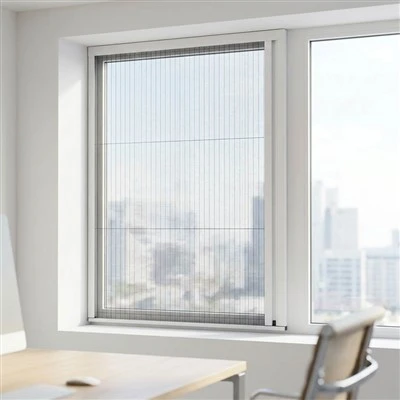
The 1970s and 80s brought the next big shift: retractable and pleated screens. For decades, industrial screens were fixed in place. If you needed to move a forklift through a loading dock, or open a restaurant patio for the winter, you had to unscrew the entire screen and store it somewhere. More often than not, screens got broken or lost in storage. I had a restaurant client in Miami tell me once that before retractable screens, they had to store 12 patio screens in a back closet every winter. Half of them would get bent, torn, or lost by spring. After we installed retractable screens, they cut their screen replacement costs by 80% in the first 3 years. No more storing, no more breaking-just roll them up when you don't need them. Pleated screens followed, designed for extra-wide openings up to 20 feet wide-shopping mall entrances, large warehouse docks, places where a retractable screen wouldn't work. They fold up like an accordion, so they take up almost no space. Game-changer for big spaces.
Modern Industrial Screens: Customization, Sustainability, and Smart Tech
Today, the industrial screen industry is driven by two things: businesses don't want one-size-fits-all screens, and they don't want to feel guilty about their environmental impact. Hyper-customization and sustainability-those are the buzzwords, but they're not just buzzwords. They're what clients actually ask for.
We build custom screens for every weird, specific commercial space you can imagine. 15-foot wide motorized screens for warehouse loading docks that open and close with a button. Ultra-fine mesh for pharmaceutical clean rooms that block even the tiniest gnats (those guys are relentless). Corrosion-resistant screens for coastal seafood plants that can handle salt air 24/7. Invisible mesh for luxury hotel patios that you can barely see-guests don't even notice them, but they keep mosquitoes out. We work with clients to match frame colors to their brand (yes, some businesses care that much), build screens for irregular, curved openings (those are a pain, but we do it), and integrate screens directly into building automation systems. Last year, we did a LEED-certified warehouse in Texas-custom motorized screens that close when the AC kicks on, reducing runtime by 22%. They saved thousands on utility bills, and they hit their energy efficiency targets. Win-win.
Sustainability isn't an afterthought anymore. Clients used to roll their eyes when I mentioned eco-friendly screens. Now, it's the first thing they ask about. We use 100% recycled aluminum for most commercial frames-keeps metal out of landfills. We offer biodegradable polyester mesh that breaks down safely at the end of its lifespan. Longer-lasting materials mean fewer replacements, less waste, and a smaller carbon footprint. It's not just marketing fluff. A bakery client in Colorado switched to our recycled aluminum screens and told me they cut their waste by 60% in a year. Sustainable screens save businesses money over time-no more replacing cheap, flimsy screens every 6 months.
Motorized and automated screens are standard now, especially in large commercial facilities. No more manual rolling or lifting-screens can be controlled with a button, a smartphone app, or even integrated into a building's management system. I installed screens for a 10-story office building in Chicago last year-they close automatically at dusk when mosquito activity spikes, and open at dawn. The facilities team doesn't have to lift a finger. It takes the human error out of it-no more forgetting to close a screen and waking up to a swarm of flies in the lobby.
What's Next for Industrial Insect Screens?
Looking ahead, it's all about smart, proactive technology. I've tested prototype screens with integrated pest sensors-they alert facility managers the second a tear or gap is detected, before pests can get in. Imagine getting a text that says, "Screen 3 on loading dock has a hole-fix it now." No more finding out about an infestation after it's already a problem. There are also screens with built-in air quality sensors that adjust based on outdoor humidity, temperature, and even pollen levels. For food processing plants, we're seeing screens with anti-microbial mesh coatings-adds an extra layer of protection against foodborne pathogens. That's huge for businesses that have to meet strict health standards.
The other big shift is extreme weather durability. Climate change is bringing more intense storms, higher winds, and harsher coastal conditions. Industrial screens are being built to withstand hurricane-force winds, extreme heat, and corrosive salt air. These aren't just bug screens anymore-they're part of a building's weather protection system. I did a project in Florida last year-screens that can handle 150 mph winds. They survived a hurricane, while the old screens next door were torn to shreds. That's the future-screens that do double duty.
But here's the thing: for all the innovation, the core job of an industrial insect screen hasn't changed in 150 years. It still needs to keep pests out, let fresh air in, and keep people and products safe. Every new material, every new design, every new tech feature is just a better way to deliver on that promise. We're not reinventing the wheel-we're making it roll smoother, last longer, and work harder for businesses.
Wrapping Up
Going back to that old Oregon cannery-staring at that 1912 steel screen, I was struck by how far we've come. That heavy, rusted panel was built for the same reason we build screens today: to solve a real problem for a business. Back then, it was stopping yellow fever and keeping flies out of canned goods. Today, it's reducing energy bills, meeting sustainability goals, and keeping luxury hotel guests comfortable. From those clunky steel screens to smart, automated ones, industrial insect screens have always been the quiet, unsung hero of commercial design and safety. They don't get the credit they deserve, but they're everywhere-keeping businesses running, people safe, and pests out.
As the industry keeps evolving, one thing's certain: businesses will always need a reliable, chemical-free way to keep pests out and fresh air in. At FlyZZZ, we've spent years building on that history of innovation. We don't just sell screens-we solve problems. Whether you're outfitting a 100,000 square foot warehouse or a chain of coastal restaurants, the right screen doesn't just keep bugs out. It makes your business safer, more efficient, and more sustainable. And that's the point-screens aren't just a tool. They're an investment in your business's future. Trust me, I've seen it a thousand times.