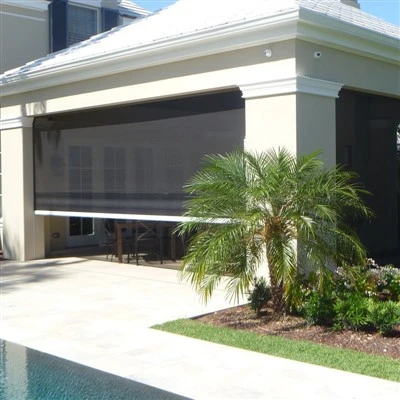
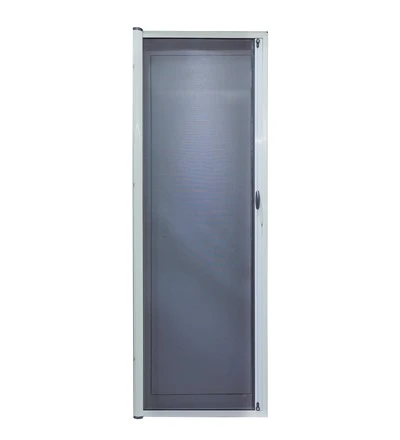
Black and grey are the two most practical mesh colors for modern window screens, but they serve different performance and appearance priorities. For most residential and architectural projects, black screen mesh provides better outward visibility and lower visual obstruction, while grey mesh offers a lighter appearance that can suit specific window frames and interior requirements.
Black vs. Grey Screen Mesh: Technical Comparison
Mesh color is not only a cosmetic specification. The pigment and coating system can affect visible contrast, solar absorption, surface temperature, and how easily dust or contamination is noticed.
For B2B procurement, the correct selection should be based on the building façade, window frame color, expected viewing distance, cleaning requirements, and end-user expectations.
| Specification | Black Screen Mesh | Grey Screen Mesh |
|---|---|---|
| Outward visibility | Generally higher | Generally lower |
| Visual contrast | High | Moderate |
| Appearance from interior | Darker, less visually noticeable against outdoor views | Lighter, more visible in many lighting conditions |
| Appearance from exterior | Low visual reflection | Can appear lighter |
| Solar absorption | Higher than lighter colors | Generally lower than black |
| Dust visibility | Dust can be less obvious depending on environment | Dust may be more visible |
| Common applications | Residential windows, premium insect screens, architectural projects | Residential windows, standard replacement screens, cost-sensitive projects |
| Frame compatibility | Black, dark bronze, anthracite, dark aluminium | White, grey, silver and light aluminium |
| Typical material options | Fiberglass, polyester, PVC-coated mesh | Fiberglass, polyester, PVC-coated mesh |
| Procurement consideration | Visibility and façade appearance | Lighter visual appearance and frame matching |
Actual performance depends on the yarn, mesh count, coating, pigment formulation, aperture ratio, and manufacturing process. Color alone should not be treated as a durability specification.
Why Black Screen Mesh Often Provides Better Visibility
One of the main reasons black mesh is widely specified for residential and architectural windows is its visual performance.
When occupants look through a window screen toward a bright outdoor environment, a darker mesh can reduce the perceived visual interference caused by the screen. The mesh becomes less noticeable, particularly when the background is significantly brighter than the interior.
This matters in:
Living rooms with large glazed areas
Bedrooms with outdoor views
Balconies and patio doors
High-rise residential buildings
Hotels and serviced apartments
Properties using large aluminium windows
Projects where uninterrupted outdoor views are a selling point
For a buyer comparing two mesh samples, visibility should be evaluated under actual lighting conditions rather than under factory lighting.
1.0–1.5 m viewing distance test
For product approval, place the screen approximately 1.0–1.5 m from the observer and evaluate it against:
A bright outdoor background
Green vegetation
Buildings or urban structures
A shaded background
Direct daylight
The same mesh can appear significantly different depending on the contrast between the interior and exterior environments.
Why Grey Screen Mesh Remains a Practical Choice
Grey mesh is commonly selected when the screen needs to visually blend with light-coloured aluminium profiles, white window frames, silver finishes, or existing replacement-screen systems.
For distributors, grey can also simplify product positioning where customers prefer a lighter screen appearance.
Grey screen mesh can be considered for:
White PVC windows
Silver aluminium windows
Light-grey aluminium profiles
Traditional residential replacement screens
Rental housing
Standard window-screen replacement programs
However, grey should not automatically be classified as a lower-performance product. A grey fiberglass mesh with the correct coating, yarn diameter, and mesh construction can provide reliable insect-screen performance.
The important point is to separate color specification from material specification.
Mesh Color Does Not Determine Mesh Strength
A common procurement mistake is assuming that black mesh is stronger than grey mesh, or vice versa.
Mechanical performance is primarily determined by construction parameters such as yarn diameter, material, coating, mesh count, tensile strength, tear resistance, and edge construction.
For example, two fiberglass meshes may have the same black appearance but different mechanical properties because of different yarn diameters or PVC coating formulations.
Key physical specifications to request
| Parameter | Why It Matters |
|---|---|
| Material | Determines basic mechanical and environmental properties |
| Mesh count | Controls aperture size and insect-blocking characteristics |
| Yarn diameter | Influences strength, visibility and open area |
| Coating thickness | Affects surface protection and handling durability |
| Tensile strength | Indicates resistance to pulling forces |
| Tear strength | Relevant to accidental damage and installation |
| Open area | Influences airflow and visual transparency |
| UV resistance | Important for long-term outdoor exposure |
| Color fastness | Indicates resistance to visible color change |
| Roll width | Affects cutting efficiency and production yield |
For large projects, these parameters should appear on the technical data sheet rather than relying on a product name such as "premium black mesh."
Fiberglass vs. Polyester: Color Selection by Material
Black and grey mesh are available in several material constructions. The choice between fiberglass and polyester can have a greater effect on product performance than the color itself.
| Property | Fiberglass Mesh | Polyester Mesh |
|---|---|---|
| Base material | Glass fiber | Polyester fiber |
| Dimensional stability | High | Good, depending on construction |
| Flexibility | Moderate | Generally higher |
| Resistance to deformation | High under normal screen conditions | Good |
| Common use | Fixed screens, window screens, doors | Pleated systems, flexible screens, specialty applications |
| Surface coating | Commonly PVC-coated | May be coated or treated depending on design |
| Color options | Black, grey and others | Black, grey and other colors |
| Processing | Woven mesh | Woven or engineered textile structures |
The final specification should therefore identify material + mesh count + yarn size + coating + color, rather than color alone.
Black vs. Grey: Heat and Solar Exposure
Black surfaces generally absorb more solar radiation than lighter surfaces. This is relevant when mesh is installed behind highly exposed glazing or on dark aluminium frames.
However, mesh color by itself does not determine the operating temperature of a complete screen assembly. Frame geometry, glass type, ventilation, orientation, solar exposure, mesh construction, and installation position all affect thermal conditions.
For projects in high-solar-exposure locations, suppliers should provide technical information for the actual mesh construction rather than making a general claim based solely on color.
Recommended specification for exposed installations
For external or high-sun applications, evaluate:
UV resistance
Color fastness
Coating adhesion
Tensile strength
Dimensional stability
Mesh deformation after heat exposure
Compatibility with the aluminium frame
Long-term performance of the spline or fixing method
This approach provides a more useful purchasing decision than simply specifying "black mesh."
Black Mesh Is Often Preferred for Premium Residential Windows
For residential developments, black screen mesh is frequently selected where the project emphasizes large glass areas and outdoor visibility.
The visual effect is particularly relevant with:
Floor-to-ceiling windows
Sliding doors
Bi-fold doors
Large casement windows
Dark aluminium frames
Anthracite or black architectural profiles
For these applications, the screen should be assessed as a complete system: mesh + aluminium extrusion profile + fixing method + frame geometry + operating mechanism.
A high-quality mesh cannot compensate for poor frame alignment or an unsuitable screen design.
For large patio openings, pleated systems can also be considered where the screen must retract when not in use. See our ►[Pleated Screen Door] for applications where folding mesh and compact storage are required.
Grey Mesh Can Be Better for Light-Coloured Window Systems
Grey mesh is often a better visual match for:
White PVC window frames
Silver aluminium frames
Light-grey architectural profiles
Existing grey replacement screens
Projects requiring a consistent light-colour appearance
The final selection should be made using physical samples installed against the specified window frame.
This is particularly important for distributors because customers often judge a finished screen based on the relationship between the mesh and frame color rather than the mesh independently.
Color Selection for Commercial and Multi-Unit Projects
For multi-unit developments, consistency is often more important than selecting a different mesh color for every window type.
A practical procurement strategy is to define a limited color matrix:
| Project Element | Recommended Approach |
|---|---|
| Black/anthracite aluminium | Black mesh |
| Dark bronze aluminium | Black or dark mesh |
| White PVC windows | Grey or black based on visibility requirement |
| Silver aluminium | Grey or black based on façade design |
| Large glazed areas | Black generally preferred for visibility |
| Standard replacement screens | Match existing frame and screen color |
| Sliding screen doors | Select based on mesh strength and operating system |
| Pleated systems | Select mesh specifically approved for pleating |
This reduces SKU complexity while maintaining a consistent finished appearance.
What B2B Buyers Should Specify Before Ordering
When ordering black or grey screen mesh in bulk, color should be only one line in the technical specification.
A purchase order should identify:
Mesh material - fiberglass or polyester
Mesh count - specified in mesh/inch or equivalent construction data
Yarn diameter
Mesh color
Coating type
Roll width and roll length
Tensile or tear requirements
UV and color-fastness requirements
Packaging method
Permitted color variation
Sample approval procedure
Inspection standard
For finished screen products, also specify:
Finished width and height
Frame profile
Profile wall thickness
Corner construction
Spline or fixing method
Handle configuration
Magnetic or locking components
Operating force where applicable
Carton dimensions
Installation instructions
How to Control Color Consistency in Bulk Production
Color consistency becomes more important when hundreds or thousands of screens are installed within one development.
The supplier should maintain a defined color reference and production control procedure. Buyers should approve a physical sample before mass production.
For mesh procurement, control should include:
Incoming yarn inspection
Coating and pigmentation control
Visual color comparison
Mesh-count inspection
Yarn-diameter inspection
Roll-to-roll consistency checks
Finished-product sample approval
For a multi-building project, it is also advisable to keep a retained reference sample from the approved production batch.
This provides a physical benchmark if replacement orders are required months later.
Choosing Between Black and Grey Screen Mesh
There is no universal "best" color. The correct choice depends on the visual target and the construction of the screen.
Choose black screen mesh when:
Outward visibility is a priority
The project uses dark aluminium frames
Large glazing areas are involved
The screen needs to be visually unobtrusive from the interior
The project targets a contemporary architectural appearance
Choose grey screen mesh when:
The window frame is white, silver or light grey
Existing screens are grey
A lighter visual appearance is preferred
Replacement compatibility is important
The project requires a consistent light-colour product range
For both options, the supplier should provide measurable material and construction specifications.
Factory Sourcing for Bulk Screen Projects
For importers and distributors, the supplier's manufacturing capability can have a greater commercial impact than a small difference in mesh color.
A factory-direct manufacturer can coordinate mesh, aluminium extrusion profiles, screen frames and complete assemblies under one production system. This can reduce communication between separate component suppliers and make quality control easier to document.
For buyers sourcing finished screens, compare:
| Supplier Factor | What to Check |
|---|---|
| Production history | Years producing screen systems |
| Factory capability | Mesh, aluminium and assembly capacity |
| Custom sizes | Maximum/minimum dimensions |
| Tooling | Existing extrusion dies and tooling support |
| QC | Incoming, in-process and final inspection |
| Samples | Pre-production approval available |
| Packaging | Export carton and pallet specifications |
| Lead time | Production schedule confirmed before PO |
| Replacement support | Ability to reproduce previous specifications |
| Documentation | Technical data, inspection records and product instructions |
When the project involves multiple product types, a supplier capable of producing both fixed and retractable systems can simplify procurement. See ►[Retractable Window Screen] for applications requiring a retractable screen configuration.
Recommendation for B2B Buyers
For most residential projects where outward visibility is important, black screen mesh is the safer starting point. For projects dominated by white, silver or light-grey window frames, grey mesh may provide better visual integration.
Do not approve a mesh based on color photographs alone. Request a physical sample, confirm the material construction, inspect the mesh count and yarn specification, and test the finished screen against the actual window profile.
For large-volume orders, Xiamen Weiziran can support project-specific mesh, frame, size and packaging specifications. Request a bulk quotation and production sample before placing your purchase order to confirm color, construction and finished-screen performance.
FAQ
Is black screen mesh better than grey screen mesh for residential windows?
Black mesh is generally preferred when outward visibility and low visual obstruction are priorities. Grey mesh can be preferable when matching white, silver or light-grey window frames. Performance depends on material, mesh construction and coating rather than color alone.
Does black mesh provide better visibility than grey mesh?
In many residential applications, black mesh provides better perceived outward visibility because the darker mesh creates less visual contrast against bright outdoor views. Actual results depend on lighting, mesh aperture, yarn size and viewing conditions.
What should I specify when ordering black or grey screen mesh in bulk?
Specify the material, mesh count, yarn diameter, coating, color, roll dimensions, tensile requirements, UV resistance, packaging and inspection criteria. For finished screens, also specify frame profile, finished dimensions, fixing method and operating configuration.