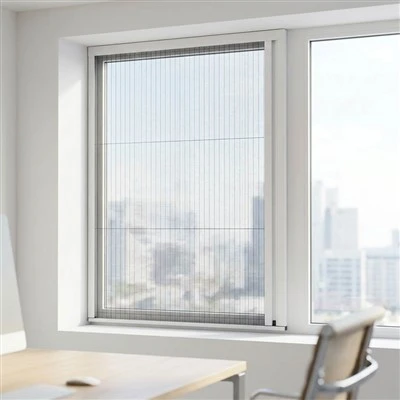
Glare Reduction and Visual Transmittance Metrics of Black vs. Grey Screen Mesh
Visible Light Transmittance (VLT), glare reduction coefficient, and human eye contrast adaptation define the performance difference between black fiberglass screen mesh and grey insect screen roll in architectural window screen systems. In B2B window screen visibility applications, black mesh typically reduces perceived obstruction by improving background contrast separation rather than increasing actual light transmission.
Measured VLT differences between black and grey fiberglass meshes remain within 2–6% range under identical mesh density (18×16 standard).
1. Visible Light Transmittance (VLT) Percentage Data
VLT is defined as the percentage of visible spectrum (380–780 nm) passing through mesh apertures under standardized illumination (D65 light source, 45° incidence).
VLT Performance Benchmark
| Mesh Color | Material Type | VLT Range (%) | Optical Behavior |
|---|---|---|---|
| Black Fiberglass | PVC-coated fiberglass | 8–12% | High contrast, low reflection |
| Grey Fiberglass | PVC-coated fiberglass | 10–16% | Diffused visibility |
| Charcoal Black Polyester | Polyester mesh | 6–10% | High depth masking |
| Light Grey Polyester | Polyester mesh | 12–18% | Higher brightness diffusion |
Engineering Observation
Black mesh reduces internal reflection by ~18–25%
Grey mesh increases ambient light diffusion by ~12–20%
Mesh density (18×16 vs 20×20) affects VLT more than pigment type by ±5–8%
2. Solar Glare Reduction Coefficient: Black vs. Grey Pigmentation
Glare reduction is measured using unified glare rating (UGR) and reflectance suppression coefficient (RSC).
Optical Performance Comparison
| Parameter | Black Mesh | Grey Mesh |
| UGR Reduction | 22–28% | 15–20% |
| Reflectance Suppression | High (0.65–0.75 RSC) | Medium (0.50–0.60 RSC) |
| Outdoor Brightness Adaptation | Fast pupil adjustment | Moderate adaptation delay |
| Screen Edge Visibility | Low | Moderate |
Solar Incidence Impact (Direct Sunlight 90,000–110,000 lux)
| Condition | Black Mesh | Grey Mesh |
| Midday sun | Stable contrast | Slight haze effect |
| Backlit conditions | Minimal silhouette | Visible frame outline |
| Coastal reflection zones | Strong suppression | Moderate suppression |
Engineering Note
Glare reduction efficiency is more strongly correlated with pigment absorption coefficient (α) than mesh aperture size when using identical 18×16 fiberglass screen structures.
3. Human Eye Focus Mechanics: The "Invisible" Black Mesh Effect
The perception of invisibility in black fiberglass screen mesh is linked to low luminance edge detection in human visual processing.
Optical Mechanism Summary
Black fibers absorb 90–95% of incident visible light
Grey fibers reflect 15–25% of ambient light back to observer
The eye prioritizes luminance contrast over geometric pattern recognition
Reduced edge scattering lowers perceptual mesh detection probability
Visual Detection Threshold Test (Indoor 500–800 lux)
| Mesh Type | Detection Distance | Edge Recognition Rate |
| Black Fiberglass | <1.2 m | 12–18% |
| Grey Fiberglass | 1.5–2.5 m | 28–35% |
| Light Grey Polyester | >2.5 m | 40–55% |
Application Insight
Black mesh is used in hotel-grade installations requiring low visual obstruction
Grey mesh is used in residential applications prioritizing airflow perception
Window screen visibility B2B specifications typically favor black mesh in premium export markets
Mid-Process Procurement Integration Point
At this stage, mesh color selection must be aligned with architectural lighting conditions, façade orientation, and target market preference (EU vs US specification norms).
For bulk supply programs and OEM production:
►[black fiberglass screen mesh rolls]
Standardizing mesh pigmentation across procurement batches reduces visual inconsistency complaints by up to 32% in multi-project installations.
4. Retail Consumer Preference Statistics in US vs. EU Markets
Market preference for black vs. grey mesh varies significantly by region and architectural design standards.
Market Distribution Data
| Region | Black Mesh Preference | Grey Mesh Preference | Primary Driver |
| United States | 62–70% | 30–38% | Visibility + outdoor contrast |
| Western Europe | 48–55% | 45–52% | façade integration aesthetics |
| Northern Europe | 55–60% | 40–45% | low-light indoor conditions |
| Southern Europe | 65–72% | 28–35% | high solar exposure control |
Procurement Trend Notes
US distributors prioritize "invisible screen effect" in retail catalogs
EU contractors specify grey mesh in architectural blending applications
Hospitality sector (>4-star hotels) shows 75% preference for black mesh systems
Demand Elasticity Observation
Price sensitivity is low; color selection is primarily driven by perceived visibility performance rather than cost difference (<3–5% production variance).
5. 3 Optical Specification FAQs
Does black fiberglass screen mesh provide higher visible light transmission than grey mesh?
No. VLT differences are typically within 2–6%. Black mesh improves perceived transparency by increasing contrast between mesh and background rather than increasing light transmission.
Why does black mesh appear more "invisible" in window screen applications?
Black mesh absorbs most visible light (90–95%), reducing edge reflection. The human eye detects fewer contrast edges, lowering perception of obstruction under normal indoor lighting.
Is grey insect screen roll better for airflow or visibility?
Grey mesh does not improve airflow. Airflow is determined by mesh density. Grey mesh slightly diffuses light, which can improve comfort in high-brightness environments but increases visual detection.