CE Certification Requirements for Screen Products
CE marking is not automatically required for every mosquito screen sold in Europe. Whether a CE mosquito screen requires CE marking depends on the product's intended use, construction, applicable EU legislation, and whether it falls within the scope of a harmonised regulation or directive. For B2B buyers, the correct process is to determine the applicable legal framework before requesting a CE certificate from a supplier.
For importers, distributors, contractors, and project procurement teams, the main risk is not simply buying an uncertified product. The greater risk is receiving incorrect documentation, a generic CE declaration unrelated to the supplied screen system, or test reports that do not cover the final product configuration. This article explains how to evaluate CE-related requirements for insect screen products and how to verify supplier documentation before placing a bulk order.
1. Supplier Evaluation: Does the Product Actually Require CE Marking?
The first question should not be, "Can the factory provide a CE certificate?" It should be:
Which EU legislation applies to this specific mosquito screen product, and does that legislation require CE marking?
Mosquito screens exist in several product categories:
Fixed window insect screens
Fixed frame door screens
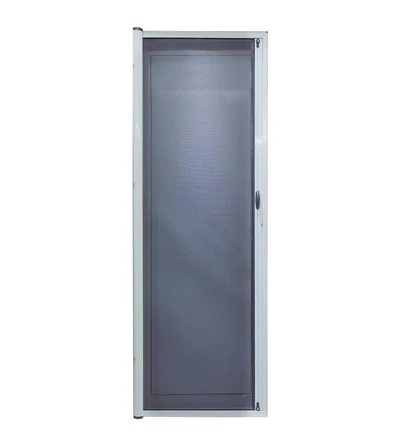
Pleated screen doors
Retractable screen systems
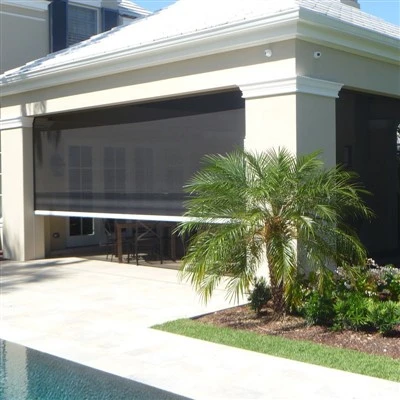
Roller insect screens
Magnetic mesh screens
DIY self-adhesive window screens
Motorised screening systems
Integrated window or door systems
A supplier may manufacture products carrying different regulatory obligations. A test report or declaration for one category should not automatically be transferred to another.
Product Classification and Typical Compliance Questions
| Product Type | Typical Construction | CE Marking Question | Buyer Verification Point |
|---|---|---|---|
| Fixed window insect screen | Aluminium frame + mesh | Depends on applicable legislation and intended use | Confirm product classification |
| Pleated screen door | Aluminium extrusion profile + pleated polyester mesh | Assess applicable construction-product requirements | Check final system configuration |
| Roller screen | Cassette + spring mechanism + mesh | Mechanical and product-specific requirements may apply | Verify operating and safety documentation |
| Magnetic mesh screen | Polyester/fiberglass mesh + magnets | Often different from framed construction products | Check material and consumer-product obligations |
| Motorised screen | Motor + electrical components | Electrical legislation may trigger CE requirements | Verify motor and electrical conformity |
| Integrated window screen system | Screen incorporated into window assembly | May be assessed as part of a larger product system | Confirm responsibility for final assembly |
The classification exercise must be completed using the actual product specification. A generic supplier statement such as "all our products are CE certified" is not sufficient for a large project tender.
2. Manufacturing Process: Documentation Must Match the Final Screen System
For a screen manufacturer, compliance begins with product definition. The final declaration, test report, technical file, and production record must correspond to the configuration actually supplied.
A pleated mosquito screen door, for example, may include:
Aluminium extrusion profile
Pleated polyester mesh
PVC or polymer guide components
Handle assembly
Upper and lower tracks
Tension cords
Fasteners
Magnets or magnetic closing components
Powder-coated aluminium surfaces
Changing one of these components can affect the identity of the finished product. Buyers should therefore specify which elements are fixed and which may be substituted during production.
2.1 Incoming Material Control Before Assembly
A controlled manufacturing process normally begins with incoming inspection.
| Component | Typical Inspection Item | Example Control |
|---|---|---|
| Aluminium profile | Wall thickness and surface finish | Drawing tolerance verification |
| Fiberglass mesh | Mesh count, weight, coating | Sample measurement per incoming batch |
| Pleated polyester mesh | Pleat consistency and width | Dimensional check against approved specification |
| Plastic accessories | Dimensions and moulding defects | First-article and batch inspection |
| Magnets | Position, holding force and coating | Functional sample check |
| Fasteners | Material and corrosion resistance | Specification and supplier document review |
| Packaging | Carton strength and dimensions | Drop/compression test according to transport requirement |
For project orders, procurement teams should ask whether the factory uses batch identification. If a defect is reported after installation, the manufacturer should be able to trace the production batch and major material lot.
2.2 Profile Cutting and Assembly Tolerances
Aluminium extrusion profiles require controlled cutting because frame squareness directly affects operation.
Typical production controls may include:
Profile cutting tolerance: project-specific, commonly controlled within approximately ±0.5 mm for critical components
Frame diagonal difference: controlled to prevent visible distortion and poor screen operation
Burr inspection after cutting
Corner joint alignment
Track parallelism
Handle position
Mesh tension or pleat alignment
The relevant values should be defined in the approved engineering drawing rather than copied from a generic catalogue.
2.3 Functional Testing Before Packing
A finished screen should be tested as a system.
For sliding, pleated, and retractable products, functional inspection can include:
Opening and closing movement
Mesh travel through guide channels
Closing alignment
Magnetic engagement where applicable
Handle attachment
Cord tension
Frame deformation
Visible surface defects
For bulk orders, buyers should request a pre-production sample approval before mass production. This sample should establish the reference configuration for subsequent inspection.
3. Cost Factors Behind CE-Related Compliance
The cost of a screen product is not limited to mesh and aluminium. For products subject to applicable CE requirements, the supplier may incur costs related to engineering review, testing, technical documentation, declarations, production control, and conformity procedures.
Typical Cost Structure
| Cost Element | Effect on Project Cost | Buyer Consideration |
|---|---|---|
| Raw mesh material | High | Compare fiberglass, polyester, PVC-coated options |
| Aluminium extrusion | High | Check alloy, wall thickness and profile complexity |
| Surface treatment | Medium | Specify powder coating or anodising requirements |
| Tooling | High for custom systems | Calculate amortisation by expected annual volume |
| Product testing | Project-dependent | Confirm whether existing evidence covers the product |
| Technical documentation | Medium | Verify documents before shipment |
| Quality inspection | Medium | Define AQL or project-specific inspection criteria |
| Export packaging | Medium | Consider carton strength and container loading |
| Third-party inspection | Optional | Useful for first orders and major projects |
The cheapest quotation can create additional cost if the supplied product does not match the documents submitted during tender approval.
For example, changing from an approved 18×16 fiberglass mesh specification to another mesh construction may reduce material cost but change visibility, insect protection, tensile properties, or other performance characteristics. The supplier should not make such substitutions without written buyer approval.
B2B Procurement Action: Before comparing quotations, request the complete product specification, applicable conformity documentation, test scope, bill of materials, and inspection plan. For factory capability and direct sourcing options, see ►[Factory Direct Mosquito Screen Supplier].
4. Quality Control for CE Mosquito Screen Projects
A quality-control process should connect four stages:
Incoming Quality Control → In-Process Quality Control → Final Quality Control → Shipment Release
Documentation should be consistent across these stages.
4.1 Incoming Quality Control: Material-to-Specification Matching
Incoming materials should be checked against approved specifications rather than visual appearance alone.
For insect mesh, relevant parameters may include:
Mesh density, such as 18×16 or another specified construction
Yarn diameter
Finished mesh weight
Coating type
Colour consistency
Tear strength or tensile performance
UV resistance data where specified
For aluminium profiles, buyers may request:
Alloy designation
Temper
Cross-sectional dimensions
Wall thickness
Surface-treatment specification
Salt spray performance where required by the project
The required acceptance limits should be stated in the purchase specification.
4.2 In-Process Quality Control: 100% Function Checks for Moving Systems
A factory may use sampling inspection for some cosmetic dimensions, but moving screen systems often benefit from functional checks on every finished unit.
For pleated and retractable screens, the factory should monitor:
| Inspection Item | Typical Failure |
|---|---|
| Opening movement | Excessive friction or jamming |
| Closing movement | Incomplete closure |
| Mesh alignment | Pleat deviation or side displacement |
| Cord routing | Uneven tension or premature wear |
| Track engagement | Mesh leaving the guide channel |
| Magnetic closure | Insufficient engagement |
| Handle installation | Loose or misaligned handle |
For project-specific products, the inspection plan should define whether each unit receives a functional test or whether a statistically sampled method is used.
4.3 Final Quality Control: Appearance, Dimensions, and Packaging
Final inspection should verify the finished product against the approved sample and purchase order.
A typical final inspection includes:
Overall dimensions
Frame diagonal measurement
Surface scratches
Mesh holes or contamination
Colour consistency
Functional operation
Accessory completeness
Label accuracy
Installation instruction accuracy
Packaging configuration
Carton quantity
If the buyer uses third-party inspection, the factory should provide the approved product specification before the inspection date. Inspectors cannot reliably assess compliance against an undefined standard.
5. Supplier Evaluation: What Documents Should a Buyer Request?
A reliable supplier should provide documentation that is specific enough to identify the product being supplied.
Depending on the applicable regulatory framework, the document package may include:
Product specification sheet
Engineering drawing
Bill of materials
Applicable test reports
Declaration of Performance or Declaration of Conformity, where legally applicable
Material declarations
Factory quality-control procedure
Production inspection records
Packaging specification
Installation instructions
Traceability or batch records
A Document Review Matrix for B2B Buyers
| Document | What to Check | Red Flag |
|---|---|---|
| Test report | Product model and tested configuration | Report covers another product |
| Declaration | Legal entity and product identification | Generic statement with no model reference |
| Technical drawing | Dimensions and construction | Drawing differs from purchase order |
| Material specification | Mesh and profile details | Material description is incomplete |
| QC report | Inspection items and acceptance results | Only a blank template is supplied |
| Packing list | Quantity and product codes | Product identification is inconsistent |
| Installation manual | Supplied product configuration | Generic instructions for another system |
A CE document should never be treated as a standalone purchasing qualification. Buyers need to confirm that the named manufacturer, product model, production configuration, and legal basis correspond to the order.
6. Buyer Checklist Before Ordering Screen Products
The following checklist can reduce documentation and quality disputes before a purchase order is issued.
6.1 Technical Specification Checklist
Product model confirmed
Finished width and height confirmed
Maximum operating size defined
Mesh material specified
Mesh colour approved
Aluminium profile dimensions approved
Wall thickness requirement defined
Surface colour code approved
Hardware configuration approved
Installation method confirmed
6.2 Compliance Checklist
Applicable EU legislation identified
CE marking requirement confirmed for the specific product
Required declaration type identified
Test evidence reviewed
Product model matches documentation
Installation instructions prepared in required languages
Importer and distributor responsibilities reviewed
6.3 Commercial Checklist
MOQ confirmed by product configuration
Tooling cost identified
Sample approval completed
Production lead time confirmed
Payment terms agreed
Incoterms defined
Packaging method approved
Container loading plan reviewed
Spare-part quantity defined
7. Selecting a Supplier for EU Screen Projects
For large procurement programmes, supplier selection should be based on evidence rather than catalogue size.
A useful evaluation process is to score suppliers across five areas:
| Evaluation Area | Suggested Weight | Evidence Required |
|---|---|---|
| Product engineering | 25% | Drawings, samples, technical specifications |
| Manufacturing capability | 25% | Production process and equipment evidence |
| Quality control | 20% | IQC, IPQC, FQC procedures and records |
| Compliance documentation | 20% | Applicable declarations and test evidence |
| Commercial execution | 10% | MOQ, lead time, packaging and communication |
A supplier can have strong production capacity and still be unsuitable for a regulated project if the technical file is weak or the product identification system is inconsistent.
7.1 Questions to Ask During a Factory Evaluation
Ask the supplier:
Which legal requirements apply to this exact product?
Why does CE marking apply, or not apply, to this product?
Which document identifies the final product configuration?
Which components are sourced externally?
How are incoming materials inspected?
What dimensions are controlled during assembly?
Is every moving screen function-tested?
Can the factory provide batch traceability?
Can documentation be linked to the purchase order model number?
What changes require re-approval by the buyer?
The answers should be documented during supplier qualification.
8. Final Recommendation for CE Mosquito Screen Procurement
The correct approach to a CE mosquito screen is product-specific verification. Do not request a generic CE certificate as the only proof of suitability. First determine whether CE marking applies, identify the applicable EU legal requirements, then verify that the supplier's technical documentation and testing relate to the exact screen system being purchased.
For Xiamen Weiziran, the procurement process should begin with a defined product configuration: mesh type, aluminium extrusion profile, dimensions, hardware, surface finish, packaging, target market, and required documentation. This creates a clear reference point for sampling, mass production, quality inspection, and shipment release.
Request a bulk procurement quotation, technical specification sheet, sample plan, and available product documentation before issuing your next screen project purchase order. For direct factory sourcing, see ►[Factory Direct Mosquito Screen Supplier].
FAQ
1. Does every mosquito screen sold in Europe require CE marking?
No. CE marking depends on the specific product and applicable EU legislation. Buyers should confirm the product classification and legal requirements before requesting CE documentation.
2. Can a supplier use one CE test report for all mosquito screen models?
Not automatically. The buyer should verify that the report and supporting documentation cover the actual product model, configuration, components, and intended use being supplied.
3. What should a buyer request before placing a bulk order for a CE mosquito screen project?
Request the product specification, engineering drawing, applicable test evidence, required declaration, quality-control plan, approved sample, packaging specification, and confirmation that the supplied configuration matches the documentation.