1. Inside Mount vs Outside Mount: Basic Configuration
The mounting position determines how the insect screen interfaces with the existing window frame.
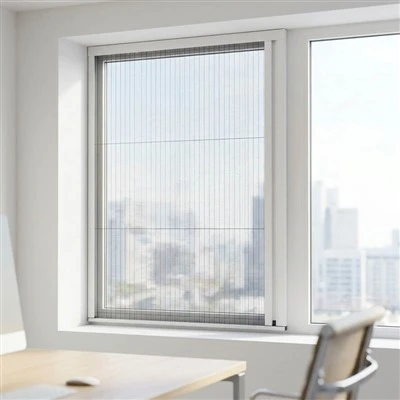
An inside mount screen sits within the available window recess. The screen frame is contained inside the opening and therefore depends on sufficient internal depth, reveal, and clearance.
An outside mount insect screen is installed on the face of the window frame or surrounding wall. The screen frame covers the opening from the outside and requires an adequate external fixing surface.
| Parameter | Inside Mount Screen | Outside Mount Insect Screen |
|---|---|---|
| Mounting position | Inside window recess | Exterior face of frame/wall |
| Primary dimension | Clear opening | Required coverage area |
| Frame depth | High importance | Less dependent on recess depth |
| Mounting surface | Internal reveal | Exterior frame/wall face |
| External projection | Lower | Higher |
| Exterior exposure | Generally lower | Generally higher |
| Cleaning access | Depends on window design | Depends on exterior access |
| Main dimensional risk | Insufficient recess depth | Insufficient fixing surface |
For B2B procurement, mounting position should be confirmed before final production dimensions are released.
A nominal opening of 1,200 × 1,500 mm does not automatically mean the finished screen should be manufactured at 1,200 × 1,500 mm. Production dimensions depend on the selected screen system, aluminum extrusion profile, mounting method, and manufacturer-approved installation allowance.
2. Mounting Position: What Must Be Measured
The first technical question is whether the window has enough usable space for the selected mounting configuration.
Inside mount: measure the internal recess
For an inside mount screen, record:
Clear opening width
Clear opening height
Recess depth
Frame reveal
Internal corner condition
Window sash movement
Handle and lock clearance
Sill and drainage conditions
Measure width and height at multiple points.
| Measurement | Recommended Record | Engineering Purpose |
|---|---|---|
| Top width | mm | Detects taper |
| Middle width | mm | Establishes central condition |
| Bottom width | mm | Checks sill condition |
| Left height | mm | Checks jamb |
| Center height | mm | Detects head variation |
| Right height | mm | Checks opposite jamb |
| Recess depth | mm | Checks profile compatibility |
| Diagonal A/B | mm | Checks squareness |
If the opening is uneven, provide all measurements to the factory rather than applying a standard deduction independently.
Outside mount: measure the coverage area
For an outside mount insect screen, the clear opening is only one part of the measurement.
Also check:
Required screen overlap
Available flat fixing surface
Exterior frame width
Wall condition
Window hardware projection
Adjacent windows
Roller shutters
Decorative trim
Drainage paths
The final screen coverage should be confirmed against the manufacturer's installation drawing.
3. Available Frame Depth and Aluminum Profile
Available frame depth is one of the main technical factors when selecting an inside mount screen.
A window may have adequate width and height but still be unsuitable for a specific inside mount system because the recess is too shallow.
Compare recess depth with the screen profile
The basic relationship is:
Available recess depth ≥ screen profile depth + required operating clearance
The exact clearance depends on the selected aluminum extrusion profile and screen mechanism.
| Site Condition | Inside Mount Screen | Outside Mount Insect Screen |
|---|---|---|
| Deep recess | Generally suitable | Also possible |
| Shallow recess | May require another configuration | Often more practical |
| Irregular recess | Requires detailed inspection | Face mounting may simplify installation |
| Narrow internal reveal | Potential limitation | External surface must be checked |
| Deep decorative trim | Must be measured | May affect external coverage |
The screen profile must also clear:
Window sash
Glass bead
Weather seal
Handle
Lock
Roller shutter
Decorative trim
Drainage channel
For a large project, measure at least one representative opening from every major window-frame type before releasing mass production.
4. Inside Mount Screen: Technical Conditions
An inside mount screen is normally considered when the window provides sufficient internal installation space.
The main requirements are:
Adequate recess depth
Sufficient clear width
Sufficient clear height
Usable internal frame reveal
No interference with the moving sash
Adequate hardware clearance
Practical removal and cleaning access
The recessed position can reduce the external projection of the screen and keep the frame within the existing architectural opening.
Inside-mount inspection points
| Inspection Point | Required Check |
|---|---|
| Recess depth | Compare with profile |
| Recess width | Check minimum dimension |
| Sill | Check frame or track interference |
| Head | Check profile clearance |
| Jambs | Check fixing surface |
| Handle | Check operating clearance |
| Sash | Check complete movement |
| Drainage | Keep water path unobstructed |
If the internal space does not meet the requirements of the selected system, an outside mount insect screen may provide a more practical installation configuration.
5. Outside Mount Insect Screen: Technical Conditions
An outside mount insect screen requires a suitable exterior fixing surface around the opening.
The main requirements are:
Adequate flat mounting surface
Sufficient frame overlap
Compatible fixing points
No obstruction from exterior hardware
No interference with shutters or blinds
Clear drainage paths
Suitable fasteners for the environment
An outside mount configuration can solve some shallow-recess problems because the screen does not need to occupy the full internal depth of the window opening.
However, the exterior installation surface becomes part of the technical specification.
External frame inspection
| External Condition | Procurement Question |
|---|---|
| Narrow exterior reveal | Is there enough fixing surface? |
| Decorative trim | Can the profile sit flat? |
| Roller shutter | Will the screen interfere? |
| Exterior handle | Is clearance sufficient? |
| Wall cladding | Can the fixing system attach securely? |
| Drainage | Does the frame obstruct water flow? |
| Coastal exposure | Are finish and fasteners suitable? |
For exterior installations, aluminum finish, fastener material, mesh specification, and environmental exposure should be reviewed together.
6. Access and Cleaning
Screen position affects both routine cleaning and future replacement.
An inside mount screen may be removable from the interior, depending on its frame and fixing method. This can be useful for hotels, apartments, offices, and upper-floor buildings where exterior access is limited.
An outside mount insect screen may require exterior access depending on the window configuration.
| Maintenance Factor | Inside Mount | Outside Mount |
|---|---|---|
| Interior removal | Often practical | Usually not |
| Exterior access | Usually unnecessary | May be required |
| Interior cleaning | Generally accessible | Depends on system |
| Exterior exposure | Lower | Higher |
| Replacement access | Usually internal | May require external access |
| High-floor maintenance | Often easier | Requires planning |
For commercial projects, maintenance access should be included in the original product specification.
A screen that requires external lifting equipment or specialist access for routine replacement can increase maintenance labor and operating cost.
7. Appearance and Visible Projection
Appearance should be evaluated through measurable installation dimensions rather than treated as a separate aesthetic issue.
An inside mount screen remains within the window recess and normally has less projection from the building facade.
An outside mount insect screen extends across the face of the window frame or wall and therefore has a larger visible footprint.
| Appearance Factor | Inside Mount Screen | Outside Mount Insect Screen |
|---|---|---|
| Frame location | Inside recess | Exterior face |
| External projection | Lower | Higher |
| Visible frame area | Recess-based | Face-based |
| Exterior facade impact | Lower | Higher |
| Coverage | Opening-focused | Opening + overlap |
| Facade alignment | Easier to keep within opening | Requires external review |
For residential developments, hotels, and commercial buildings, the mounting position should be consistent with the approved window schedule.
If a project contains several window types, different mounting configurations can be specified when the physical window geometry requires them.
8. Exterior Exposure and Mesh Selection
Mounting position can affect the required mesh specification.
An outside mount insect screen generally receives more direct exposure to sunlight, rain, wind, and airborne contaminants than an interior installation.
Common mesh materials include fiberglass, PVC-coated fiberglass, polyester, and aluminum mesh.
| Mesh Material | Structural Characteristics | Common Application |
|---|---|---|
| Fiberglass mesh | Stable, flexible, corrosion resistant | Fixed window screens |
| PVC-coated fiberglass | Coated glass fiber structure | Residential and commercial screens |
| Polyester mesh | Flexible, higher elongation | Retractable, magnetic, and pleated systems |
| Aluminum mesh | Rigid metal structure | Applications requiring metal mesh |
Mesh selection should consider:
Mesh density
Opening size
Yarn or wire diameter
Tear strength
UV exposure
Airflow
Visibility
Screen mechanism
For example, an 18×16 fiberglass mesh is a common configuration for general insect-screen applications. Mesh count alone does not define performance; opening size, material, coating, and wire diameter also affect the final result.
9. Window Operation and Hardware Clearance
The screen must not restrict the primary window mechanism.
This is particularly important for:
Casement windows
Sliding windows
Tilt-and-turn windows
Awning windows
Double-hung windows
French windows
Large balcony windows
| Window Type | Inside Mount Check | Outside Mount Check |
|---|---|---|
| Casement | Sash movement | Exterior hinge/handle |
| Sliding | Track and sash | External frame overlap |
| Tilt-and-turn | Tilt and turn path | Exterior mounting space |
| Awning | Opening movement | Upper clearance |
| Fixed window | Recess dimensions | Face coverage |
| French window | Full opening | External hardware |
A tilt-and-turn window, for example, requires enough internal clearance for the sash to operate through its complete range.
A sliding window requires sufficient separation between the screen profile and the existing sliding track.
For bulk orders, test a representative window before applying the same screen configuration to hundreds of openings.
10. Selecting the Appropriate Window Screen System
Inside mount versus outside mount is the installation position. The screen mechanism should then be selected according to the opening, operating method, and project requirements.
Xiamen Weiziran's website currently organizes its product range into eight categories: Retractable Screen, Magnetic Screen, Pleated Screen, Fixed Frame Screen, Door and Window Screen Accessories, Adhesive Window Screen, Extendable Window Screen, and Remote Control Screen.
For procurement, this classification can be used to match the mounting condition with the actual screen system.
| Project Requirement | Relevant Category |
|---|---|
| Fixed permanent opening | Fixed Frame Screen |
| Screen retracts when not required | Retractable Screen |
| Folding/pleated operation | Pleated Screen |
| Magnetic temporary closure | Magnetic Screen |
| Adhesive installation | Adhesive Window Screen |
| Adjustable/sliding window application | Extendable Window Screen |
| Mesh and replacement components | Door and Window Screen Accessories |
| Motorized operation | Remote Control Screen |
For this article, the most relevant internal reference is ►[Fixed Frame Screen], particularly where the project requires a fixed aluminum frame around a measured window opening.
If the opening requires a retractable or folding system, the mounting analysis should be repeated using the profile dimensions and operating clearances of that specific system.
11. Project Selection by Building Type
The correct mounting method can vary according to the building and maintenance model.
Residential apartments
An inside mount screen can be suitable where the window recess provides sufficient depth and the exterior facade must remain relatively unobstructed.
An outside mount system may be more practical where the recess is shallow or where the exterior frame provides a larger, continuous fixing surface.
Hotels
Maintenance access is a major consideration.
An inside mount configuration can allow maintenance staff to remove the screen from the room without exterior access equipment, depending on the window and screen design.
Commercial buildings
Standardization should be based on window-frame groups.
Windows should be classified by:
Frame system
Opening dimensions
Operation
Recess depth
Mounting surface
Exterior exposure
Residential developments
Create a window-screen schedule before mass procurement.
| Project Data | Required Record |
|---|---|
| Window type | Casement / sliding / tilt-turn |
| Opening size | W × H |
| Recess depth | mm |
| Frame reveal | mm |
| Mounting position | Inside / outside |
| Screen category | Fixed / retractable / pleated |
| Mesh | Fiberglass / polyester / other |
| Frame finish | Specified finish |
| Quantity | Units |
| Sample approval | Yes / No |
12. Inside Mount vs Outside Mount: Project Decision Matrix
Use the following matrix during technical review.
| Technical Factor | Inside Mount Screen | Outside Mount Insect Screen |
|---|---|---|
| Recess depth | Must be sufficient | Less important |
| Internal reveal | Required | Not primary |
| Exterior fixing surface | Not primary | Must be sufficient |
| External projection | Lower | Higher |
| Exterior exposure | Generally lower | Generally higher |
| Interior maintenance | Often easier | Depends on access |
| Shallow recess | Potential limitation | Often practical |
| Irregular recess | Requires inspection | Face mounting may simplify installation |
| Strict facade appearance | Often suitable | Requires architectural review |
| High-floor external access | Usually easier | May require planning |
| Standardized project | Good with consistent frames | Good with consistent faces |
There is no universal mounting position for every project.
The correct specification is determined by the physical window geometry, available installation space, screen mechanism, operating requirements, maintenance access, and architectural requirements.
13. Procurement Specification for Bulk Orders
A purchase order should contain more than a simple width × height measurement.
A technically useful specification can include:
| Specification | Example |
|---|---|
| Product category | Fixed Frame Screen |
| Mounting | Inside mount |
| Opening width | 1,200 mm |
| Opening height | 1,500 mm |
| Recess depth | 38 mm |
| Frame material | Aluminum extrusion |
| Mesh material | Fiberglass |
| Mesh density | 18×16 |
| Mesh color | Black |
| Frame finish | Powder coated |
| Window type | Sliding |
| Quantity | 500 sets |
| Installation | Interior |
| Sample | 1 set |
| Drawing approval | Required |
The example values above are for specification format only. Actual project dimensions should come from site measurements and the selected manufacturer's technical drawing.
For OEM and project orders, the supplier should confirm final production dimensions rather than relying on a generic deduction formula.
14. Factory Review Before Mass Production
For a large project, the recommended sequence is:
Window schedule → Site measurement → Mounting position → Screen category → Profile selection → Sample → Installation test → Dimension approval → Mass production
The representative sample should verify:
Frame fit
Profile depth
Sash clearance
Hardware clearance
Mesh tension
Opening and closing operation
Mounting strength
Removal method
Final visible projection
Once the representative installation passes inspection, the approved configuration can be applied to openings using the same window-frame specification.
Different frame systems should receive separate screen configuration codes rather than being forced into one universal specification.
15. B2B Order Review Checklist
Before approving an inside mount screen or outside mount insect screen, confirm:
Window opening width measured at multiple points
Opening height measured at multiple points
Recess depth recorded
Frame reveal recorded
Exterior fixing surface checked
Window sash movement checked
Handle and lock clearance checked
Sill and drainage conditions checked
Roller shutter or blind interference checked
Mounting position confirmed
Screen category confirmed
Aluminum extrusion profile confirmed
Mesh material confirmed
Mesh density confirmed
Frame finish confirmed
Maintenance access confirmed
Representative sample approved
Final production dimensions approved
This checklist is especially useful for distributors and contractors managing multiple window types across the same project.
16. Request a Bulk Project Review
For distributors, engineering contractors, hotel procurement teams, and building-material suppliers, the most useful RFQ package includes actual project data rather than only a target screen size.
Send:
Window schedule
Opening dimensions
Recess depth
Frame reveal
Window type
Photos of representative openings
Quantities
Preferred screen category
Mesh specification
Aluminum finish
Installation method
Xiamen Weiziran's website states that the company has focused on screen window and screen door products for more than 20 years and operates across R&D, production, sales, and service. The site also lists 20+ product series and 15,000 m² production capacity.
For a bulk quotation, submit your window schedule and mounting requirements for product selection, technical review, and production pricing.
Conclusion
The difference between an inside mount screen and an outside mount insect screen is primarily an installation-geometry issue.
An inside mount requires sufficient recess depth, internal reveal, and hardware clearance. An outside mount requires an adequate external fixing surface, correct coverage dimensions, and consideration of weather exposure and facade projection.
For project procurement, the correct sequence is:
Measure → classify the window → select the mounting position → select the screen system → verify profile clearance → approve a representative sample → release production.
This process reduces dimensional errors and prevents a screen specification designed for one window-frame configuration from being applied incorrectly to another.
Need a factory quotation for a custom screen project? Send your window schedule, drawings, quantities, and mounting requirements to Xiamen Weiziran for technical review and bulk-order pricing.
FAQ
What is the main difference between an inside mount screen and an outside mount insect screen?
An inside mount screen fits within the window recess, while an outside mount insect screen is fixed to the exterior face of the frame or surrounding surface. Recess depth and external mounting space are the main dimensional differences.
How do I know if a window has enough depth for an inside mount screen?
Measure the clear recess depth and compare it with the selected aluminum screen profile plus its required operating clearance. The manufacturer's technical drawing should confirm compatibility before production.
Which screen system should I select for a bulk window project?
The system depends on the window type and operating requirement. Fixed Frame Screen suits permanent framed openings, while Retractable, Pleated, Magnetic, Adhesive, Extendable, and Remote Control systems address different applications.