Selecting Screens for Villa Projects: A Technical Procurement Guide
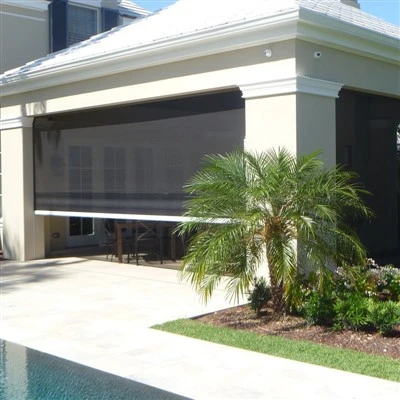
A villa mosquito screen is an insect-control system fitted to windows, doors, balconies, patios, or other external openings while maintaining ventilation and access. For villa developments, screen selection should be based on opening dimensions, operating frequency, wind exposure, frame structure, mesh material, drainage, cleaning access, and replacement requirements rather than screen appearance alone.
For distributors, contractors, and project procurement teams, the correct system is usually the one that meets the opening geometry and operating requirements with the fewest installation and maintenance problems.
1. Problem Analysis: Why Villa Screen Selection Requires More Than Mesh
Villa projects rarely have identical openings throughout the building. A single property may include:
Casement windows
Sliding windows
French doors
Hinged exterior doors
Lift-and-slide patio doors
Balcony openings
Large terrace doors
Narrow service doors
Floor-to-ceiling glazed openings
Each opening creates different requirements for the villa mosquito screen.
A screen designed for a 600 mm × 1,200 mm window cannot automatically be transferred to a 2,400 mm × 2,400 mm patio opening. The frame span, mesh tension, operating force, guide structure, and wind load all change with size.
Typical villa project requirements
| Requirement | Small Window | Standard Door | Large Patio / Balcony Door |
|---|---|---|---|
| Typical opening width | 400–1,200 mm | 700–1,000 mm | 1,500–3,500+ mm |
| Operating frequency | Low–medium | Medium–high | High |
| Required opening access | Limited | Full passage | Full passage |
| Wind exposure | Low–medium | Medium | Medium–high |
| Preferred screen structures | Fixed / retractable | Pleated / retractable | Pleated / sliding / retractable |
| Cleaning requirement | Low | Medium | High |
| Replacement access | Important | Important | Very important |
The dimensions above are project-planning ranges, not universal installation limits. Final selection should follow the actual opening schedule and system drawings.
2. Technical Reasons: What Determines Screen Performance?
2.1 Opening geometry determines the screen mechanism
The first technical decision is not mesh material. It is the relationship between the screen and the window or door movement.
| Opening Type | Recommended Screen Structures | Main Engineering Consideration |
|---|---|---|
| Casement window | Fixed, retractable | Frame depth and sash clearance |
| Sliding window | Sliding, retractable | Track alignment |
| Single door | Pleated, retractable, magnetic | Frequent passage |
| French door | Double pleated / retractable | Central meeting point |
| Large patio door | Pleated, sliding, retractable | Span and wind exposure |
| Balcony opening | Pleated / retractable | Large opening and operating frequency |
| Irregular opening | Custom frame system | Survey accuracy |
For doors used several times per hour, a permanently fixed screen can become inconvenient because users must interact with the screen every time they enter or leave.
A retractable or pleated system allows the screen to move away from the opening when access is required.
2.2 Mesh material affects durability and visual performance
Two common materials for villa mosquito screens are fiberglass mesh and polyester mesh.
| Property | Fiberglass Mesh | Polyester Mesh |
|---|---|---|
| Base material | Glass fiber with coating | Polyester fiber |
| Typical application | Fixed and framed screens | Pleated and flexible systems |
| Dimensional stability | High | High when properly processed |
| Flexibility | Moderate | Higher |
| Folding capability | Limited | Suitable for pleating |
| Tear resistance | Good | Depends on yarn and construction |
| UV performance | Depends on coating | Depends on polymer and coating |
| Cleaning | Easy | Easy with correct method |
| Typical screen systems | Fixed, sliding, roller | Pleated, magnetic, retractable |
Mesh selection should therefore follow the mechanical design of the screen system.
A pleated screen generally requires a mesh that can maintain repeated folds without permanent deformation. A fixed-frame screen has different requirements because the mesh remains under relatively constant tension.
2.3 Mesh density affects insect exclusion and airflow
A common specification is 18 × 16 mesh, meaning approximately 18 openings per inch in one direction and 16 in the other.
However, mesh count alone does not fully describe screen performance. Yarn diameter, aperture size, coating, material, and manufacturing tolerance also affect the final product.
For project procurement, request:
Mesh count
Yarn diameter
Material
Coating type
Aperture size
Tear strength
UV resistance
Color
Batch consistency
A supplier providing only "high-quality mosquito mesh" without technical data gives the buyer little information for comparing factories.
3. Solutions: Match the Screen System to the Villa
3.1 Pleated screens for high-use doors
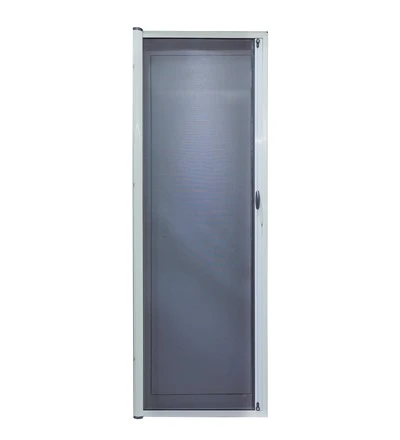
Pleated systems use folded mesh that compresses laterally when the opening is not required.
They are particularly suitable for:
Patio doors
Balcony doors
French doors
Large residential openings
Narrow-frame architectural doors
The major technical advantage is the low storage depth of the folded mesh.
For large villa developments, pleated systems can also simplify product standardization because multiple opening widths can be covered by the same basic system architecture with different frame dimensions.
3.2 Retractable screens for windows
Retractable systems roll or move the mesh into a housing when the opening needs to remain unobstructed.
They are suitable for:
Casement windows
Sliding windows
Large ventilation openings
Windows requiring frequent opening and closing
For a window project, the buyer should verify housing dimensions, guide clearance, mesh tension, spring or operating mechanism, and mounting method.
For window-specific applications, see ►[Retractable Window Screen].
3.3 Sliding screens for compatible window and door tracks
Sliding screens move horizontally inside a frame or track.
They work well when the building already has a compatible sliding-door or sliding-window configuration.
The main issue is track compatibility.
Before bulk production, confirm:
Track width
Frame depth
Roller diameter
Overlap between panels
Screen-to-sash clearance
Bottom-track drainage
Installation tolerance
A screen that fits the nominal opening but conflicts with the existing track can create installation problems across an entire project.
3.4 Fixed-frame screens for low-access windows
Fixed screens are mechanically simple and suitable for openings that do not require regular passage.
They are often appropriate for:
Bathroom windows
Utility-room windows
Stairwell windows
Fixed ventilation openings
Their main limitation is access. Removing the screen may be necessary for cleaning or maintenance.
4. Wind Resistance: Large Villa Openings Need Structural Evaluation
Wind exposure becomes more important as screen area increases.
A 500 mm × 800 mm window screen and a 2,500 mm × 2,500 mm patio screen do not experience the same mechanical conditions.
The larger screen has:
Greater mesh surface area
Greater potential wind pressure
Longer frame spans
Higher guide loads
Greater risk of mesh deflection
More demanding installation tolerances
For coastal villas, hillside properties, exposed balconies, and high-rise residential projects, screen selection should therefore include a wind-load assessment.
Procurement data for wind-exposed installations
Ask the supplier to specify:
Maximum recommended screen dimensions
Frame profile dimensions
Mesh construction
Guide structure
Fixing method
Maximum unsupported span
Recommended installation tolerance
Whether additional intermediate supports are required
Do not use a generic "windproof" description as a technical specification.
5. Cost Analysis: Compare the Complete Installed System
The lowest unit price does not necessarily produce the lowest project cost.
A villa screen system should be evaluated using the complete procurement equation:
Total project cost = Product cost + Packaging + Freight + Installation + Maintenance + Replacement
A low-cost screen with poor dimensional consistency may increase labor costs during installation.
Example B2B cost structure
| Cost Item | Low-Cost System | Engineered Project System |
|---|---|---|
| Unit screen price | Lower | Higher |
| Installation labor | Potentially higher | More predictable |
| Measurement requirements | Basic | Defined |
| Packaging | Basic | Project-specific |
| Replacement parts | May vary | Standardized |
| Maintenance | Depends on construction | Defined by system |
| Long-term procurement | Higher variation risk | Better standardization |
Actual costs depend on dimensions, materials, order quantity, packaging, destination, Incoterms, and installation conditions. Buyers should request a complete quotation rather than comparing only the EXW or FOB unit price.
6. Prevention: Avoid Common Procurement and Installation Failures
6.1 Do not manufacture before final opening measurements
Architectural drawings may show nominal dimensions. Finished openings can differ because of:
Plaster thickness
Tile installation
Window-frame tolerances
Floor finishing
Insulation layers
Waterproofing
Construction deviations
For mass villa projects, establish a measurement protocol before production.
A practical workflow is:
Drawing review → Sample opening → Site measurement → Technical confirmation → Pilot production → Mass production
6.2 Standardize profiles and components
If a project contains 200 villas with 12 screen configurations, excessive variation creates procurement and after-sales problems.
Standardize where possible:
Aluminum extrusion profile
Mesh material
Mesh color
Handle design
Roller or guide components
Fasteners
End caps
Packaging
Spare parts
This reduces SKU complexity and makes replacement orders easier.
6.3 Confirm color and surface finish by physical sample
Aluminum profiles may be supplied in different finishes, including powder-coated or anodized surfaces.
For multi-batch projects, approve a physical reference sample before mass production.
Record:
Profile color
Surface finish
Gloss level
Mesh color
Hardware color
Approved sample number
This is particularly important when screens are supplied together with aluminum windows and doors from another manufacturer.
6.4 Establish quality-control checkpoints
For bulk villa orders, quality control should not depend only on final visual inspection.
A useful production inspection sequence includes:
| QC Stage | Inspection Item |
|---|---|
| Incoming material | Aluminum profile, mesh, hardware |
| Cutting | Profile length and angle |
| Assembly | Frame dimensions and squareness |
| Mesh installation | Tension, pleat formation, attachment |
| Hardware | Handle, roller, magnet or guide operation |
| Functional test | Opening and closing |
| Surface inspection | Scratches, coating defects |
| Final packing | Quantity, labels, installation accessories |
7. Recommendations for Villa Project Buyers
7.1 Use a zoning approach
Instead of specifying one screen type for every opening, divide the villa according to function.
| Villa Zone | Preferred Screen Approach | Procurement Priority |
|---|---|---|
| Bedrooms | Retractable / fixed | Ventilation and visual quality |
| Living room | Pleated / retractable | Large opening access |
| Kitchen | Retractable / pleated | Frequent operation |
| Balcony | Pleated / retractable | Wind resistance |
| Patio | Pleated / sliding | Wide opening |
| Bathrooms | Fixed / retractable | Cleaning access |
| Service areas | Fixed / magnetic | Cost control |
This approach prevents over-specification on simple openings while maintaining appropriate systems for high-use areas.
7.2 Define a technical schedule before requesting quotations
A professional RFQ for a villa mosquito screen should include more than product photos.
Recommended RFQ fields:
| Specification | Required Data |
|---|---|
| Opening type | Window / door / patio / balcony |
| Finished width | mm |
| Finished height | mm |
| Screen type | Pleated / retractable / sliding / fixed |
| Mesh material | Fiberglass / polyester |
| Mesh color | Black / grey / other |
| Mesh density | e.g. 18 × 16 |
| Frame material | Aluminum |
| Surface finish | Powder coating / anodized |
| Opening direction | Left / right / double |
| Installation | Face mount / reveal mount |
| Wind exposure | Low / medium / high |
| Quantity | Units |
| Packaging | Individual / grouped |
| Spare parts | Required / not required |
This format allows factories to quote against the same technical baseline.
7.3 Select the supplier based on repeatability
For a 10-unit villa order, the buyer can focus heavily on unit price.
For a 300- or 1,000-villa development, repeatability becomes equally important.
A qualified supplier should be able to demonstrate control over:
Aluminum extrusion dimensions
Mesh batch consistency
Cutting tolerances
Assembly dimensions
Hardware compatibility
Packaging
Labeling
Replacement components
Production capacity
Xiamen Weiziran operates as a source factory for insect screen doors, windows, mesh systems, and aluminum profiles, serving export-oriented B2B customers. For project procurement, the practical objective is not simply to buy screens from China, but to establish a repeatable specification that can be manufactured, inspected, packed, and reordered consistently.
8. Recommended Procurement Specification for Villa Mosquito Screens
For most villa developments, the recommended process is:
1. Classify every opening by function.
Separate windows, standard doors, French doors, patio doors, and balcony openings.
2. Select the mechanism according to movement.
Use fixed systems for low-access openings and pleated or retractable systems where regular passage is required.
3. Specify the mesh technically.
State material, mesh count, yarn construction, color, and required durability instead of using generic descriptions.
4. Confirm the aluminum system.
Define profile dimensions, finish, hardware, and installation method.
5. Validate one physical sample.
Test the screen on a representative finished opening before mass production.
6. Establish dimensional tolerances.
The factory and installer should use the same definition of finished opening size and allowable deviation.
7. Standardize components across the project.
Reduce unnecessary SKUs and maintain a controlled spare-parts list.
8. Include replacement planning.
Large developments require a practical system for ordering replacement mesh, guides, handles, rollers, and other wear components.
For distributors and contractors, this approach also makes future projects easier to quote because the approved screen specifications can become a reusable product schedule.
FAQ
What is the best villa mosquito screen for large patio doors?
Pleated and retractable systems are common choices for large patio doors because they provide full opening access while keeping the screen compact when not in use. Final selection should consider opening width, height, wind exposure, operating frequency, and frame structure.
Can a villa mosquito screen be manufactured to custom dimensions?
Yes. Project screens can generally be produced according to confirmed finished opening dimensions, provided the selected system has suitable dimensional limits. Buyers should submit width, height, opening direction, mounting method, mesh specification, and required quantity for quotation.
How should buyers compare villa mosquito screen suppliers for bulk orders?
Compare suppliers using technical specifications, sample performance, dimensional repeatability, aluminum profiles, mesh quality, QC procedures, packaging, spare parts, production capacity, and total landed cost-not unit price alone.
Request a Bulk Villa Mosquito Screen Quotation
For villa developments, residential distributors, and contractor procurement, send the opening schedule with width × height, quantity, opening type, mesh requirement, frame finish, and installation method.
Xiamen Weiziran can evaluate the opening configuration and provide a project-based quotation, sample arrangement, product specifications, and bulk-order production plan.
Request a bulk quotation or product catalog for your villa mosquito screen project.